





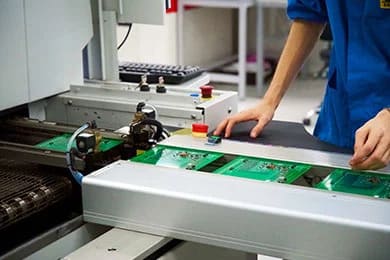
When designing, manufacturing, or assembling printed circuit boards, adhering to strict quality control standards is paramount. As PCBs are typically produced in bulk, a fault can often impact the entire order, resulting in lost time, money, and customer confidence.
To ensure electrical safety, structural integrity, and long-term reliability within circuit board manufacture and assembly, the global electronics industry relies on a unified framework: IPC Standards.
First devised by the Institute for Printed Circuits, now known as the Global Electronics Association, the IPC Standards remain definitive industry-wide guidelines that govern every phase of electronic production, from design formatting to final inspection. For designers and engineers working with contract manufacturers, understanding these specifications can prevent unexpected costs and devastating manufacturing delays.
Decoding the IPC Performance Classes
Under the IPC Standards, electronic assemblies are divided into three distinct performance classes based on their operational criticality, required lifespan, and the harshness of their end environment.
| Performance Class | Industry Definition | Critical Requirements | Key Examples |
|---|---|---|---|
| Class 1 | General Electronic Products | Cosmetic imperfections are ignored; the core requirement is simply that the assembly functions. | Toy drones, TV remotes, cheap consumer novelties. |
| Class 2 | Dedicated Service Electronic Products | Uninterrupted service and extended life are desired. Cosmetic standards are high, but minor flaws are allowed if the function isn’t compromised. | Laptops, enterprise routers, industrial control systems. |
| Class 3 | High-Reliability / Harsh Environment | Continuous uptime is mandatory. Equipment downtime is unacceptable, environmental conditions are severe, and the device must function on demand. | Aerospace avionics, pacemakers, military radar, life-support hardware. |
The Core Inspection Standards: IPC-A-600 vs. IPC-A-610
While there are dozens of documents in the IPC catalogue, two standards form the bedrock of professional, large-scale PCB manufacturing and quality assurance:
- IPC-A-600 (Acceptability of Printed Boards): This document dictates the visual quality criteria for bare, unpopulated circuit boards. It outlines what fabricators must achieve regarding laminate integrity, trace plating thickness, copper adhesion, and drill alignment before a single component is soldered down.
- IPC-A-610 (Acceptability of Electronic Assemblies): This is the most widely referenced standard in the electronics industry. It defines the visual acceptability criteria for finished, populated assemblies. It covers everything from component alignment and solder joint wetting angles to lead protrusion and surface cleanliness.
Solder Joint Geometry under Modern Revisions
Modern revisions of IPC J-STD-001 (Requirements for Soldered Electrical and Electronic Assemblies) and IPC-A-610 account for the physical differences introduced by lead-free alloys like SAC305.
Unlike traditional leaded solder (Sn63/Pb37), which cools to a bright, mirror-like finish, lead-free solder naturally exhibits a duller, more granular appearance. IPC guidelines ensure inspection teams and automated systems differentiate between a perfectly acceptable lead-free joint and a genuine cold or starved solder joint.
Manufacturing Conformance at PCB Train
Operating a state-of-the-art UK fabrication facility requires more than just knowledge of these guidelines: it demands strict quality systems. At PCB Train, according to specific individual contract conditions, our operations can conform to modern IPC guidelines alongside high-level quality management frameworks, including:
- ISO 9001:2015 Certification: Ensuring strict process control and repeatability.
- AS9100D Compliance: Meeting the rigid quality management requirements for aerospace and defence manufacturing.
- ISO 13485 Standards: Adhering to the specialised tracking and reliability criteria for medical devices.
By aligning your design files with modern IPC specifications, you establish a common language with our production team, ensuring your final hardware performs flawlessly under real-world conditions.
Get a quick online quote for your PCB project today.
First Published: October 2013. Updated: June 2026.

Philip King
Latest posts by Philip King (see all)
- How to Design an Enclosure for a Printed Circuit Board Assembly (PCBA) - 18th June 2026
- Understanding IPC Standards in PCB Fabrication and Assembly - 2nd June 2026
- SMD PCBs: What They Are And Where They Are Used - 7th October 2022


Leave a Reply